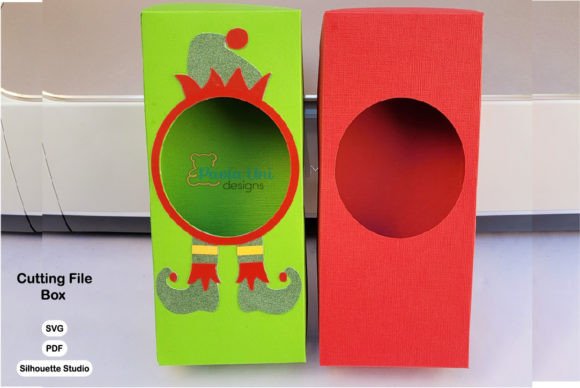
Box for Elf: A 3D SVG for Christmas Branding
As a brand designer working with local artisans and boutique retailers, I constantly evaluate digital assets not just for their aesthetic appeal, but for their functional utility in commercial design. When reviewing the Box for Elf asset, my immediate assessment focuses on its potential to elevate seasonal packaging beyond simple decoration. This isn't merely a craft file; it is a structural component of holiday storytelling. The design evokes a mood that is simultaneously whimsical and nostalgic, striking a delicate balance between playful childhood wonder and refined artisanal quality. For a small business owner, this specific tone is crucial. It suggests a brand personality that is warm, approachable, and deeply invested in the customer experience, making it an excellent fit for handmade businesses, bakeries, florists, or children’s product lines looking to establish a memorable holiday identity.
Elevating Local Business Packaging and Product Presentation
In a recent consultation with a local candle maker and gift shop, we discussed the challenge of creating shelf appeal during the saturated holiday season. The Box for Elf serves as a powerful solution for this exact scenario. Because this is a 3D SVG designed for cutting machines like Cricut, Cameo, or ScanNCut, it bridges the gap between digital design and physical product packaging. For a bakery, this structure could house premium cookie sets or hot cocoa mixes, transforming a standard food label into an interactive unboxing experience. For a skincare brand, it offers a unique vessel for limited-edition holiday balms, distinguishing the product from generic competitors through tactile engagement.
The versatility of this graphic design asset extends far beyond the box itself. In professional branding, consistency is key. Elements from this design can be extracted and repurposed across various touchpoints. I envision using the silhouette or decorative motifs as accent graphics on thank-you cards, sticker seals, or even as a watermark on social media graphics announcing a seasonal launch. This creates a cohesive visual hierarchy where the packaging, marketing visuals, and web design all speak the same festive language. When customers see this distinctive shape in a promotional ad or Instagram story, they immediately associate it with your specific brand's holiday offering, reinforcing recognition and trust.
Strategic Applications for Seasonal Marketing Visuals
Effective small business branding requires assets that work hard across multiple platforms. The Box for Elf excels in creating high-impact hero graphics for websites and email newsletters. During the holiday rush, consumers are visually fatigued; a custom-designed, three-dimensional paper element photographed in natural light cuts through the noise better than stock photography. For creative entrepreneurs, this asset provides the foundation for authentic content creation. You can stage product mockups featuring the box to showcase scale and texture before committing to large-scale production, ensuring the final result aligns with your brand identity.
Furthermore, this asset supports emotional connection, which is the currency of local commerce. Whether used for a florist’s poinsettia arrangement or a boutique’s jewelry set, the box implies care and intentionality. It signals to the buyer that the item inside was curated, not mass-produced. In editorial design for lookbooks or printed price lists, incorporating line art derived from this 3D SVG adds a layer of sophistication without overwhelming the layout. It acts as a decorative brand element that frames your products rather than competing with them, maintaining a polished and professional aesthetic throughout your seasonal campaign.
Navigating Design Constraints and Brand Alignment
While the Box for Elf is a robust tool for festive branding, experienced designers know that every asset has its ideal context. This design shines in environments that celebrate warmth, tradition, and craftsmanship. However, it should be applied with caution in formal corporate branding or ultra-minimalist luxury contexts where ornamentation might dilute the brand message. If your business relies on dense legal text, ingredient lists, or technical specifications, ensure the intricate cuts of the box do not compromise readability or structural integrity. The decoration must support the information, not obscure it.
Visual hierarchy remains paramount. When integrating this box into a broader packaging design system, avoid overcrowding the surface with additional clipart or heavy patterns. Let the 3D form itself be the star. On very small labels or business cards, the detailed nature of the cut lines may get lost or become impractical to produce. In these instances, simplify the motif or use it only as a subtle background texture. Always test the asset against low-contrast backgrounds; intricate paper cuts require shadow and depth to be visible, so flat, dark color schemes may render the design invisible unless properly lit or outlined.
Technical Validation for Commercial Production
Before deploying any digital product for client work or retail sales, rigorous technical validation is non-negotiable. As a brand designer, I always recommend testing the Box for Elf on real packaging mockups before finalizing production. Cut a prototype using your intended material weight; cardstock behaves differently than kraft paper or acetate. Verify that the tabs and slots align perfectly, as structural failure undermines brand trust. Check the vector editability of the SVG file to ensure you can resize elements without distortion or adjust line weights for different cutting machines. This step is vital for maintaining professional quality across varying batch sizes.
Typography pairing is another critical consideration. Test the box alongside your brand’s font suite. Does the whimsy of the box clash with a severe geometric sans-serif, or does it harmonize beautifully with a hand-lettered script? The right typeface anchors the 3D SVG within your established visual identity. Additionally, review PNG transparency if you plan to use digital renders of the box for web design or Canva templates. Ensure edges are clean and shadows are realistic. Finally, and most importantly for commercial design, confirm the commercial license terms. Using design assets for profit requires clear rights, protecting your business from legal issues while supporting the original creator. By treating this asset with professional diligence, you transform a simple holiday craft into a cornerstone of a successful seasonal brand strategy.
Maximizing ROI Through Thoughtful Implementation
Ultimately, the value of the Box for Elf lies in its ability to differentiate your offerings in a crowded marketplace. For handmade sellers and local shops, distinct packaging is often the primary driver of perceived value. This asset allows you to offer a premium unboxing experience without the cost of custom industrial manufacturing. By leveraging the included instructions and dual box variations, you can create tiered product offerings—perhaps a smaller version for stocking stuffers and a larger one for gift sets. This flexibility maximizes the return on your design investment.
Remember that successful holiday branding is about more than just aesthetics; it is about operational feasibility and customer delight. Use this 3D SVG to streamline your seasonal workflow while enhancing your visual narrative. Whether featured in a festive Instagram reel, printed on a hang tag, or assembled as the centerpiece of a gift bundle, the Box for Elf provides a tangible connection point between your brand and your community. When executed with attention to detail and strategic foresight, it becomes more than a container; it becomes a signature element of your business’s holiday tradition, fostering loyalty and encouraging repeat engagement year after year.