Mother and Baby Rhinos Light Box: A Maker’s Review
As a designer who constantly bridges the gap between digital assets and tangible, sellable goods, I approach every new file with a specific question: will this actually translate into a product my customers want to buy? When I first opened the Mother and Baby Rhinos Light Box file, I wasn't just looking at a cute animal illustration. I was evaluating a potential bestseller for my nursery decor line. While this asset is categorized as a 3D SVG intended for Shadow Boxes, its silhouette and composition offer unique opportunities for mixed-media creators and embroidery digitizers who understand how to adapt layered paper art concepts into textile applications.
First Impressions and Emotional Resonance
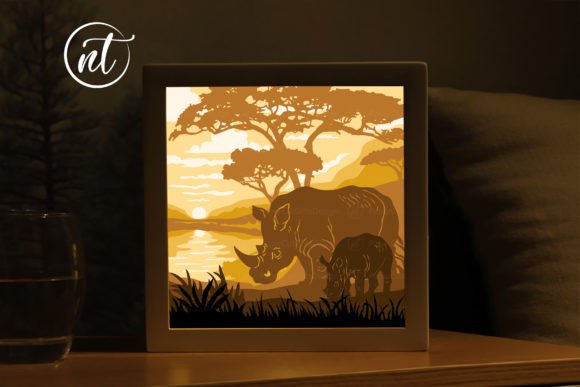
The immediate mood of the Mother and Baby Rhinos Light Box is one of protective warmth and gentle strength. Unlike generic safari themes that can sometimes feel cartoonish or overly busy, this design relies on clean lines and distinct layering to create depth. For an embroidery designer, this is gold. The separation of layers, originally designed with 5mm foam board spacing for paper crafts, translates beautifully into stitch hierarchy. You can visualize where the satin stitch borders should define the mother rhino’s outline versus the softer fill stitch areas for the baby. It feels organic rather than mechanical, which is crucial when creating a personalized gift or boutique item where emotional connection drives the sale.
Real-World Application: The Custom Nursery Tote
To truly test the viability of this design, I recently adapted it for a custom canvas tote bag intended as a "new mom" hospital bag accessory. This wasn't a direct stitch-out of the original file; it was an interpretation. Because the source material is built for light boxes, the negative space is just as important as the positive shapes. On the tote, I used the rhino silhouettes as a large-scale applique foundation. The distinct separation between the mother and calf allowed me to use contrasting fabric textures—a heavy linen for the mother and a soft minky for the baby—mimicking the physical depth of the original shadow box concept.
The result was a sophisticated tote bag design that stood out against typical printed vinyl decals. Customers responded to the tactile quality. They could feel the dimensionality that the original 3D SVG structure inspired. This project confirmed that while the Mother and Baby Rhinos Light Box is technically a paper craft asset, its strong compositional bones make it an excellent reference for high-end commercial embroidery projects where texture and layering are key selling points.
Navigating Fabric Limitations and Hoop Sizes
However, translating a light box design to needle and thread requires caution. Not every surface welcomes this level of detail. During my testing phase, I found that the design performs exceptionally well on stable, medium-weight fabrics like canvas, denim, and quilt cotton. These materials support the density required to replicate the bold, graphic nature of the rhinos without puckering.
I would advise extreme care when attempting this on stretchy knits or lightweight baby clothes. The visual weight of the rhinos, derived from their shadow box origins, can overwhelm delicate garments. If you are planning baby embroidery for onesies or bibs, you must significantly simplify the design. Reduce the internal detail and rely on outline stitches or minimal fills to maintain the garment's drape. Always verify your hoop size before committing; the aspect ratio of light box designs is often square or vertical, which may not fit standard rectangular embroidery hoops without resizing or re-digitizing elements.
Furthermore, textured fabrics like terry cloth or fleece can obscure the crisp edges that give this design its charm. If you are stitching on a towel or blanket, consider using a water-soluble topping to keep the stitches defined. Without this step, the intricate layering effect gets lost in the pile, diminishing the professional finish your craft business relies on.
Elevating Product Value Through Design Integrity
Using a recognizable, well-structured theme like the Mother and Baby Rhinos Light Box signals professionalism to buyers. In the saturated Etsy market, customers can spot a hastily converted clip-art design from a mile away. This asset, with its intentional spacing and balanced proportions, provides a framework for a premium handmade product. When you respect the original architecture of the design—even when adapting it from paper to thread—you create a finished piece that looks cohesive and expensive.
This attention to detail builds trust. Whether you are selling a digital embroidery file or a physical embroidered patch, showing that you understand the interplay of light, shadow, and form sets your shop apart. For Etsy sellers and small shop owners, this means better photos, higher perceived value, and fewer returns due to poor stitch quality. The design’s inherent balance makes it easier to create attractive printable mockups and marketing assets because the focal point is naturally centered and visually stable.
Essential Technical Notes for Makers
Before you load this design into your machine or list it in your shop, run through this practical checklist to ensure success:
- Test Stitch on Scrap: Never assume the digital preview matches reality. Stitch a sample on your exact target fabric to check for registration issues between layers.
- Verify Licensing: Since this is primarily marketed as a 3D SVG for shadow boxes, confirm the license terms specifically cover embroidery adaptation and commercial sale of finished stitched goods.
- Check Stabilizer Pairing: The density required to mimic paper layers needs robust backing. Use a cut-away stabilizer for apparel and tear-away for sturdy home decor items.
- Thread Color Contrast: Test your palette in black and white first. If the mother and baby blend together in grayscale, they will lack definition in thread. Ensure sufficient contrast between layers.
- Simplify for Small Formats: If scaling down for caps or pockets, remove internal decorative elements. Retain only the primary silhouettes to prevent thread buildup and needle breaks.
- Mockup Realism: When creating listings, show the design on actual fabric textures rather than flat digital renders to manage customer expectations regarding the 3D effect.
Final Thoughts for Creative Entrepreneurs
The Mother and Baby Rhinos Light Box is more than just a pretty picture; it is a structural blueprint for dimensional art. For the experienced maker, it serves as a reminder that great embroidery often starts with understanding form and space, not just stitch types. Whether you are crafting a heartfelt holiday gift, expanding your nursery inventory, or developing new design assets, approaching this file with a critical, adaptive eye will yield results that honor both the original art and your craftsmanship. Always prioritize the integrity of the final product over speed, and let the thoughtful composition of these rhinos guide your needle toward something truly special.