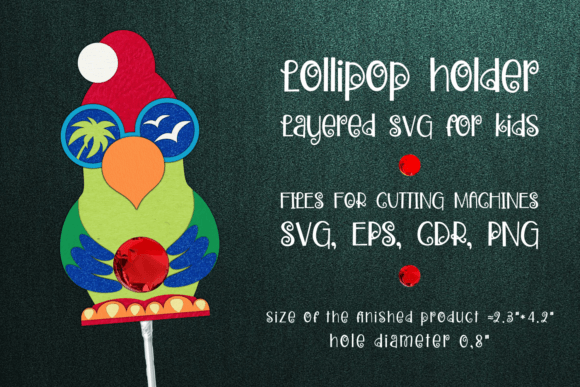
Flamingo Christmas Lollipop Holder Review
As a designer who constantly balances creative whimsy with production reality, I approach every new digital asset with a critical eye. When I first opened the Flamingo Christmas Lollipop Holder file, I wasn't just looking for a cute holiday motif; I was evaluating its structural integrity as a functional 3D SVG template. This isn't merely a decorative graphic; it is a multi-layer construction project intended for cutting machines that translates into tangible, interactive gifts. For those of us running an Etsy shop or managing a small craft business, the distinction between a pretty picture and a viable product is everything. My initial impression was that this design successfully bridges the gap between tropical flair and traditional holiday warmth, but its true value lies in how well those layers align during assembly.
First Impressions and Structural Integrity
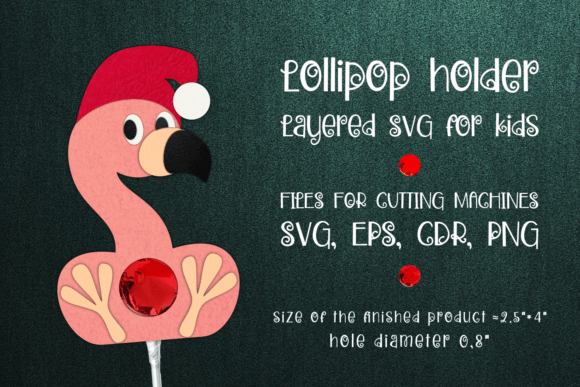
The visual personality of this Flamingo in Santa Hat design strikes a specific mood: playful nostalgia. It avoids the overly sterile look of some vector art, offering enough character to feel handmade while maintaining the clean lines necessary for precision cutting. As a 3D SVG, the layering is the most critical technical aspect. In my review of the file structure, I looked specifically at how the slots and tabs interact. A lollipop holder fails if the candy slides out or if the paper tears at the stress points during insertion. This template appears to account for standard cardstock weights, but as with any digital embroidery file or cutting template, you must verify the kerf and slot tolerance against your specific material thickness before committing to a full production run.
For makers transitioning between digital cutting and machine embroidery, this design offers a unique hybrid opportunity. While primarily a cutting file, the distinct shapes make it an excellent candidate for mixed-media projects. Imagine using this flamingo silhouette as an applique design on a sweatshirt, where the physical lollipop holder becomes a separate, attachable accessory. The bold outlines would translate beautifully into satin stitch borders, while the interior details could utilize fill stitch or running stitch depending on the desired texture.
Real-World Application: The Holiday Market Test
To truly evaluate this asset, I mentally placed it into a real-life scenario relevant to my current holiday lineup. I am currently preparing inventory for a local winter market and updating my online store with personalized gift options. I envisioned using the Flamingo Christmas Lollipop Holder as a premium add-on item for custom apparel orders. Specifically, I considered bundling it with embroidered baby bibs or toddler sweatshirts. Parents love interactive elements, and a treat holder that matches their child’s holiday outfit creates a cohesive, high-value bundle.
In this context, the design performs exceptionally well as a "small surprise." It elevates a standard transaction into a memorable unboxing experience. For Etsy sellers, this type of low-cost, high-perceived-value item can significantly increase average order value. However, practical judgment is required. If I were selling these as standalone finished products, I would need to ensure the cardstock is heavy enough to withstand shipping without bending. If used as part of a custom apparel package, the flamingo’s color palette needs to coordinate with common holiday fabric choices like cranberry, forest green, or cream. The design’s versatility allows it to fit seamlessly into nursery decor themes or boutique branding that leans toward modern vintage aesthetics.
Navigating Material Limitations and Production Risks
While the Flamingo Christmas Lollipop Holder is charming, it demands respect for material limitations. This is where many crafters stumble. You cannot simply cut this design from any paper stock and expect professional results. Thin, glossy paper may look festive but often lacks the rigidity to hold a standard lollipop securely, leading to customer disappointment. Conversely, extremely thick cardstock might cause the intricate tab slots to rip during assembly. I strongly advise testing your chosen substrate first. Create a prototype and physically insert a lollipop to test the friction fit. If you plan to offer this as a commercial embroidery project companion piece, ensure the paper quality matches the perceived value of your stitched goods.
Furthermore, consider the environment where this finished product will live. Unlike a durable embroidered patch or tote bag design, a paper-based holder is ephemeral. It is not washable and is sensitive to moisture. If you are marketing this alongside kitchen towels or aprons, clearly communicate its intended use as a temporary photo prop or party favor rather than a permanent accessory. Managing customer expectations is vital for maintaining trust and positive reviews. For those adapting this concept into fabric via machine embroidery, be mindful of stitch density on stretchy fabrics. A dense satin stitch outline on a lightweight knit t-shirt can cause puckering, distorting the flamingo’s cheerful expression. Always use appropriate stabilizer and test on scrap fabric that mimics your final garment's weight and texture.
Enhancing Brand Value Through Thoughtful Design
Using assets like the Flamingo Christmas Lollipop Holder correctly signals professionalism. It shows that you understand the intersection of digital design and physical utility. When customers receive a handmade product that functions perfectly, it reinforces brand consistency and reliability. This design contributes to visual appeal by adding dimensionality to flat merchandise displays. In printable mockups for your shop listings, showing the holder actually containing a candy provides immediate scale reference and usage inspiration, which drives buyer engagement far better than a flat digital preview alone.
For creative entrepreneurs, this template also serves as a valuable design asset for content creation. Photographing the assembly process or styling the finished holder with other holiday embroidery projects creates authentic social media content. It demonstrates your expertise and gives followers a reason to engage beyond just purchasing. However, always confirm licensing terms before selling the digital file itself or using it in ways not explicitly permitted. Protecting your business means respecting intellectual property while maximizing the utility of legitimate commercial embroidery and cutting assets.
Essential Designer Notes for Success
Before you load this file into your software or cutter, run through this practical checklist derived from years of production experience:
- Verify Compatibility: Ensure your cutting machine software supports the specific SVG layer structure provided. Not all programs interpret multi-layer 3D files identically.
- Material Testing: Cut a single test unit on your intended paper stock. Check slot tightness and structural stability before batch production.
- Color Contrast: If adapting for embroidery, test thread colors against your fabric background. Dark fabrics may require a light running stitch underlay to prevent the design from sinking into the texture.
- Hoop Size Confirmation: If combining with embroidery, confirm the design fits within your hoop size with adequate margin for stabilization. Resizing can distort slot dimensions in 3D templates.
- Licensing Check: Review the included documentation regarding commercial use of finished products versus digital redistribution. Clarity here prevents future legal headaches.
- Mockup Validation: Use black and white mockups to check value contrast before stitching. If the flamingo disappears in grayscale, it may lack sufficient definition when stitched in similar-toned threads.
The Flamingo Christmas Lollipop Holder represents a delightful opportunity to merge digital precision with holiday cheer. Whether used strictly as a cutting template or adapted into a mixed-media embroidery project, its success depends entirely on your attention to physical realities. By approaching this design with the same rigor you apply to complex stitch files, you transform a simple download into a reliable, profitable component of your holiday product lineup. Remember, in our industry, the most beautiful design is one that works flawlessly in the hands of the end user.